
Craftivisim
Craftivism combines traditional handicrafts with activism to promote social change.
This principle reflects a lot of the work Hé the Studio is doing. Currently, the main focus is on finding local solutions for the global textile waste crisis.
More about the various initiatives below.
-
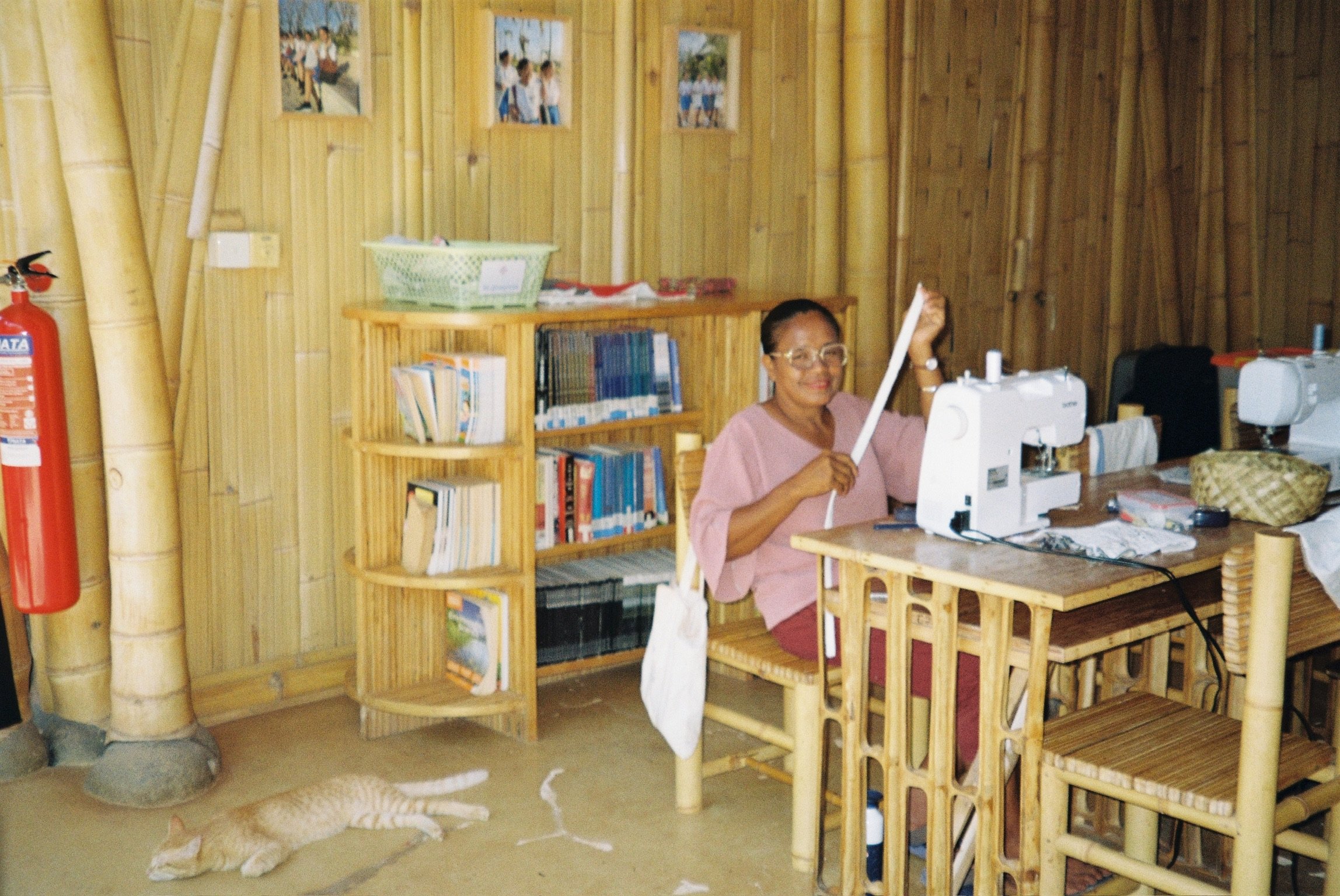
SHF Upcycling Hub
In 2022, Hester arrived as a volunteer at the Sumba Hospitality Foundation and initiated a small sewing workshop to breathe new life into donated garments and old textiles. Fast forward three years, and the project has grown into a thriving initiative, employing a seamstress.
The sewing hub plays a crucial role in the Foundation’s zero-waste efforts, ensuring no textiles go to waste, supplying the organization with practical and creative products, offering unique upcycled souvenirs for guests, and educating students on sewing and upcycling techniques. Most recently, a local teacher has been trained as well further spreading sewing skills across the island.
-

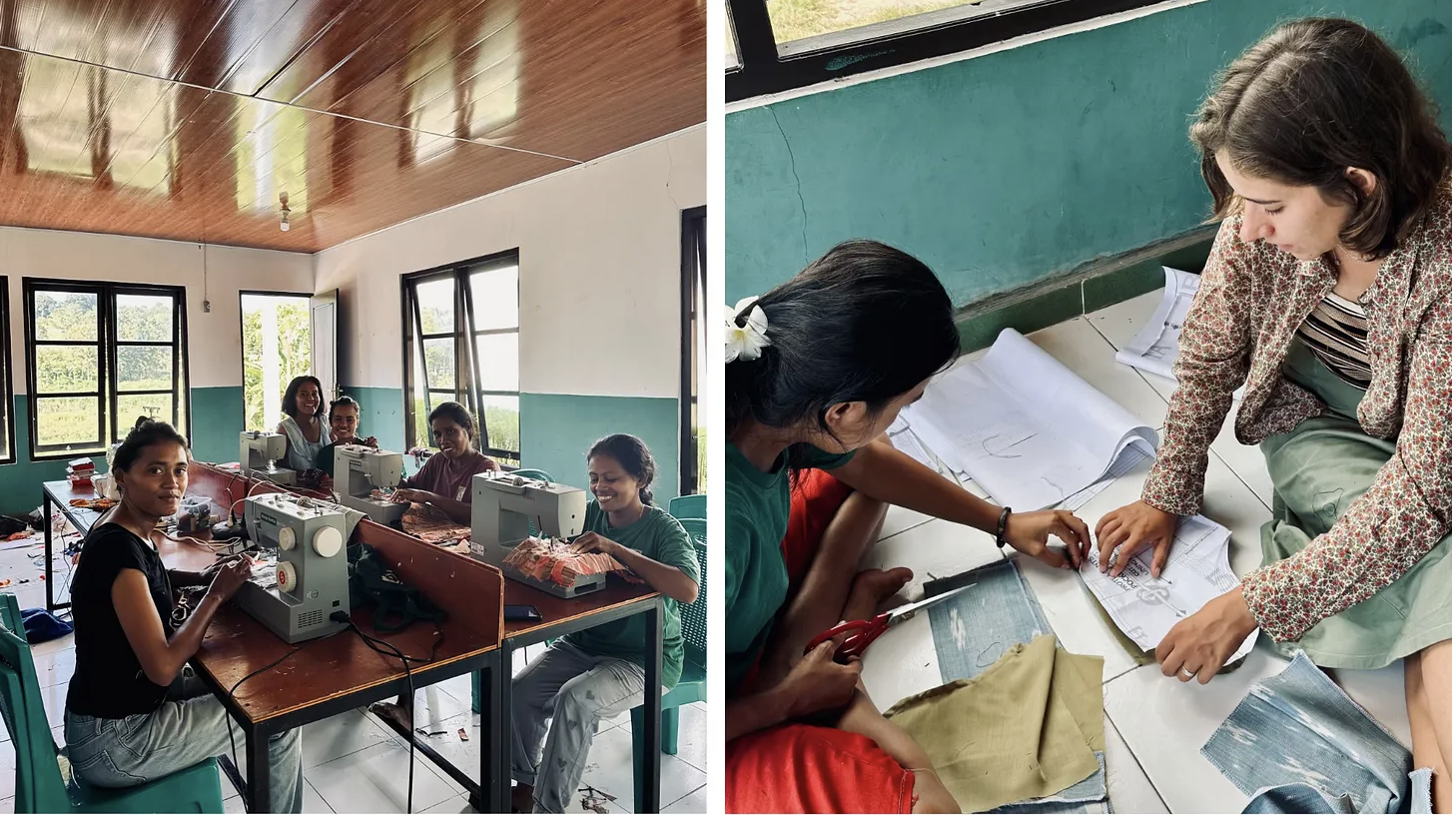
Karaja Upcycling Hub
Karaja Sumba is a beautiful and impactful initiative founded by Roswita Asti Kulla in Lamboya, dedicated to empowering Sumbanese women through traditional weaving skills while uplifting them from poverty and preserving their cultural heritage.
In January 2024, Asty and Hester joined forces to further expand the organization’s reach and impact. A milestone was the opening of the Upcycling Hub in January 2025, where four local weavers are learning to upcycle garments and textiles. This initiative not only equips them with skills to support their livelihoods but also contributes to a local solution for the global textile waste crisis.
-

PhD on Garment Durability
Since 2022, Hester has been exploring Garment Durability and its role a just circular transition. She never anticipated to be so captivated by the concept, as it ultimately led her to pursue a PhD on the topic at l’ENSAM Paris. This has resulted in two scientific publications so far.
Moving to Sumba gave her research a new dimension, making it more critical, action-driven, and collaborative. Her work with the Sumba Hospitality Foundation (SHF) and Karaja Sumba continuously enriches her findings, allowing her to develop circular solutions for textile waste while simultaneously empowering women through sustainable craftsmanship.



Hi there,
Welcome back to Greetings From, which this time returns to an already familiar destination: Karaja. The occasion? The publication of my third scientific article (you can read the full version here), which summarizes a first part of my findings from the last two years. Today’s edition aims to break down my article into understandable parts to ensure that I can reach as many people as possible, regardless of whether they have a background in fashion or sustainability. My work can only make sense if people can understand it.
My PhD | What is the purpose of doing one?
Well, great question to get started with! It took me a while to believe that doing a PhD is actually valuable. I imagined myself sitting in a grey laboratory (including lab coat), writing away on my computer, doing tests, and delivering a 200 + page manuscript that would collect dust on shelves, never seeing the daylight. Indeed, what could ever be the purpose of something like this? Well I can assure you that this is not how my PhD has been going. Over the past two years I have been able to do transformative field research, meet with countless people, travel around, have life-changing exchanges, learn about different cultures, habits and customs, all while keeping a constantly evolving diary (both written and visual), so I can translate all of my impressions into articles (max 10 pages) that will each form a chapter of my final manuscript. Breaking down an enormous (and quite daunting) task into bitesize chapters. Besides the academic part, doing a PhD is requiring you to keep challenging yourself, your brain (especially!) and your mental ability to continuously stretch yourself into new understandings and perspectives.